What if it's already working and you just can't see it?
Sep 09, 2026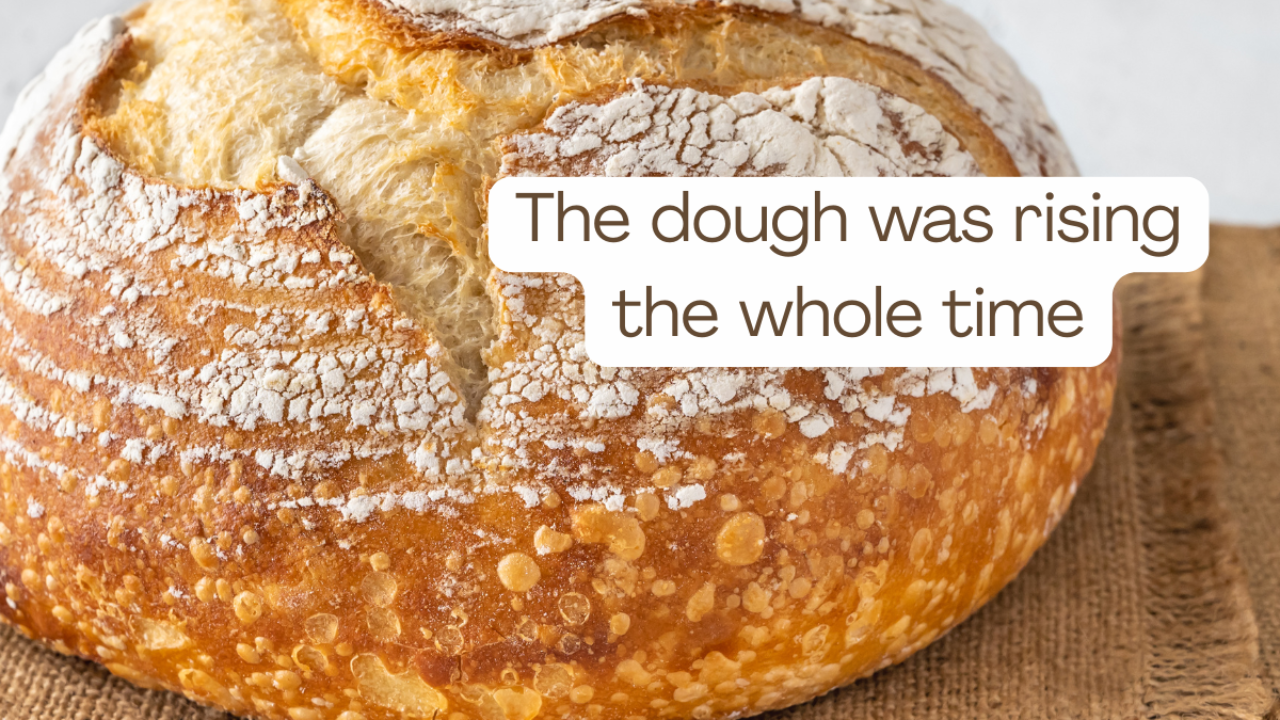
I recently made my first sourdough loaf.
And I want to be clear — I followed the instructions to the letter. Every step. Every timing. Every fold. I did exactly what I was supposed to do.
The Cambro container is clear — so I could see the dough the entire time. I wasn't guessing. I wasn't operating in the dark. The evidence was right there in front of me. I could watch it rising in real time.
The recipe called for the dough to double in size — from one liter to two — before moving to the next step. Four hours, give or take.
And still. Every twenty minutes. Leaning in. Watching the measurement marks on the side. Wondering — even as I watched it rise — if it was going to be enough. If it was really working. If I had done something wrong somewhere along the way that I couldn't see yet.
At just over four hours — it had doubled. Exactly as the process said it would. I baked it. And it came out so perfectly that I could hardly believe I had made it myself.
The proof was visible the entire time.
The doubt showed up anyway.
What the doubt was actually about
Here's what I've been sitting with since that loaf came out of the oven.
The doubt wasn't really about the bread.
I had followed every instruction. I had done my part. The evidence was right in front of me. And yet something underneath all of that correct action kept questioning whether it was going to work — for me specifically.
A quiet, unexamined question that lives underneath the surface: underneath all the correct action was a question I hadn't fully answered yet: am I actually someone who can pull this off?
And it connects to something I've been studying in my Core Dynamics graduate program that has stayed with me.
At the highest level of personal and professional development — what the Core Dynamics framework calls Level 7 — there is a discipline that separates sustained high performers from everyone else. It's called trusting the process. And it isn't passive. It's a deeply intentional commitment to working your plan with excellence, even when results aren't immediately visible. Even when doubt shows up. Even when the latest and greatest new thing is whispering that maybe you should try something different.
The foundation principles of this discipline include two that stopped me in my tracks:
We always do the best we can and nothing else.
You know more than you think you know.
And the one that ties directly back to my sourdough experience:
Faith is more powerful than proof.
Faith is more powerful than proof
Read that again.
Not blind faith. Not ignoring evidence. But the kind of faith that sustains you through the four hour wait — through the slow pipeline, the relationship that's building but not yet referring, the habit that's forming but not yet automatic.
The proof was visible in my Cambro. And the doubt showed up anyway. Because doubt doesn't live in evidence. It lives in identity. In the unresolved question of whether you are someone whose process works.
And the answer to that question doesn't come from the evidence. It comes from the faith you choose to operate from before the evidence arrives.
That's the work. That's the identity shift. And it's available to every single one of us — not when the loaf comes out perfectly, but while the dough is still rising.
What this looks like in your business
You've been reaching out to an agent consistently. Showing up with value. Being genuinely curious about their business. Doing everything right.
And you keep wondering if it's working. If it's going to be enough. If maybe you should try something different.
The relationship is building. Right on schedule. The dough is rising — you just haven't given it the full four hours yet.
You've committed to a process — prospecting, preparation, intentional outreach — and you've been showing up for it consistently. The pipeline is starting to move.
And the doubt is right there. Questioning whether it's really working. Whether it's going to work for you the way it seems to work for everyone else.
It's working. Trust the process. Work the plan.
But — and this is equally important — trusting the process doesn't mean ignoring the signals. Level 7 also calls us to constantly evaluate, learn and revise. So before you walk away from this post, sit with these two questions:
What signs do you have that things aren't working as well as they could?
What adjustment will you make — and at what point will you make it?
Trusting the process and making adjustments in the moment aren't in conflict. They're both part of working the plan to excellence.
The loaf rises. Sometimes right on schedule. Sometimes with a small correction along the way.
Either way — keep baking.
Receive these weekly Momentum Boosts automatically!
Join our mailing list to automatically receive these in your inbox each week, as well as any updates from our team.
Don't worry, your information will not be shared.
We hate SPAM. We will never sell your information, for any reason.
